
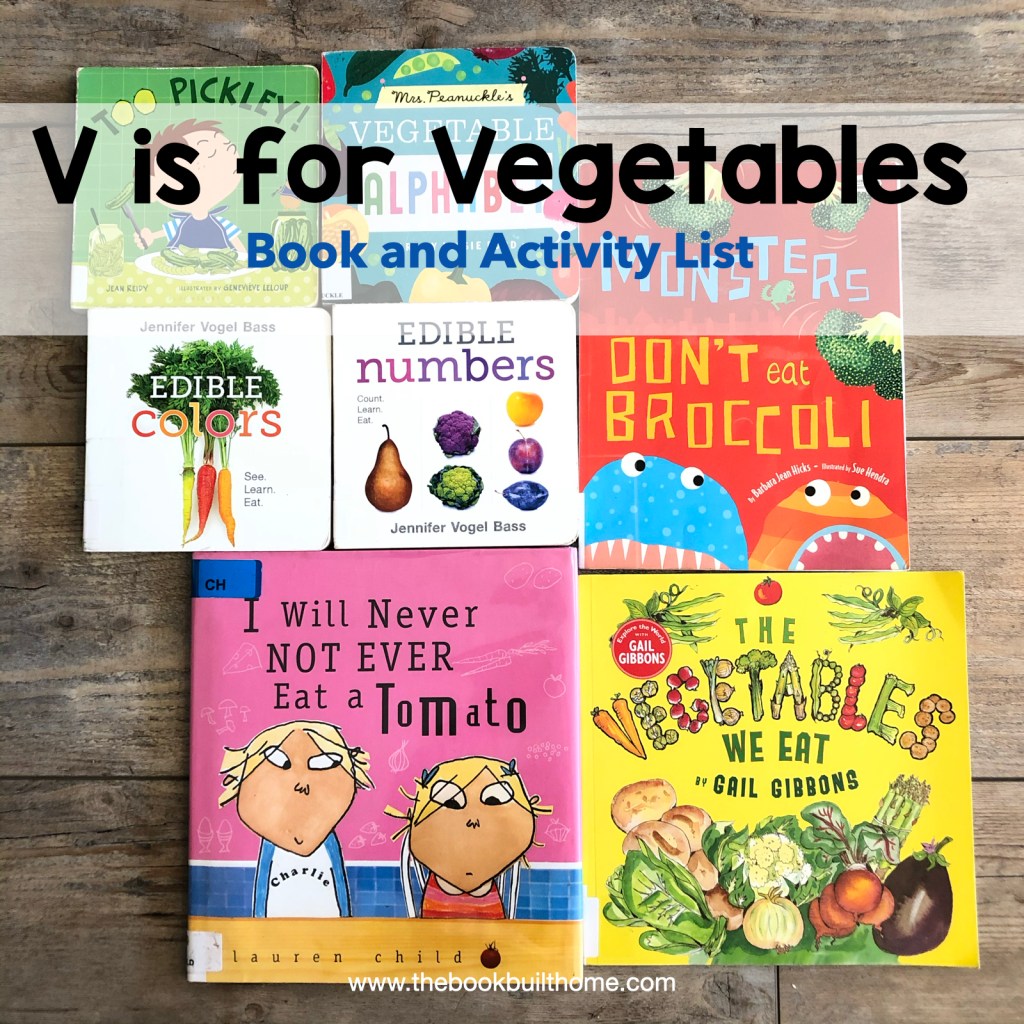
Welcome to our V is for Vegetables Book List and Activity List!
This is a part of my A-Z Preschool Letter of the Week book list series. My hope is that this would be a resource you can use in your Preschool, Pre-K, or Kindergarten classroom or homeschool as you teach and disciple your precious little ones.
Below you will find…
- A list of our favorite VEGETABLE books
- A list of activities you can try at home
- A couple ideas for Biblical Integration
V is for Vegetable Book List
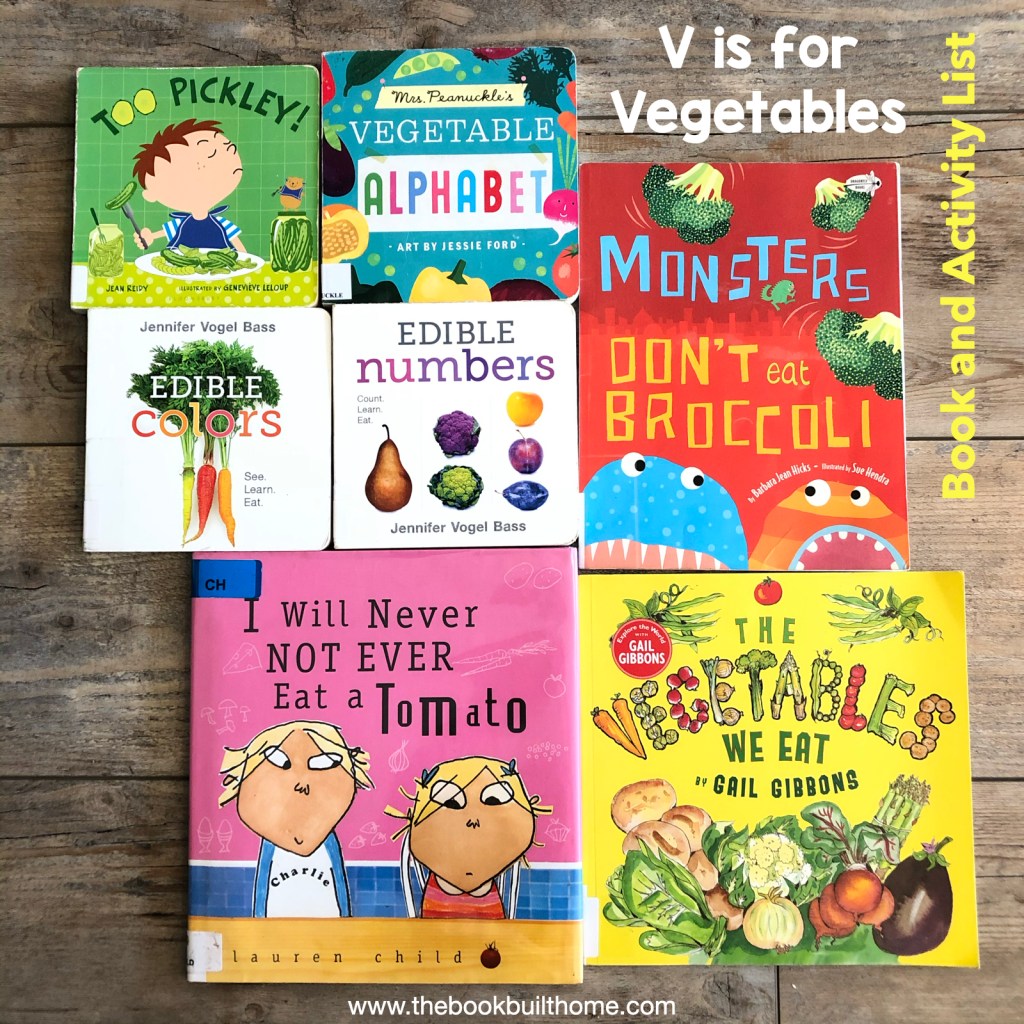
The Vegetables We Eat by Gail Gibbons
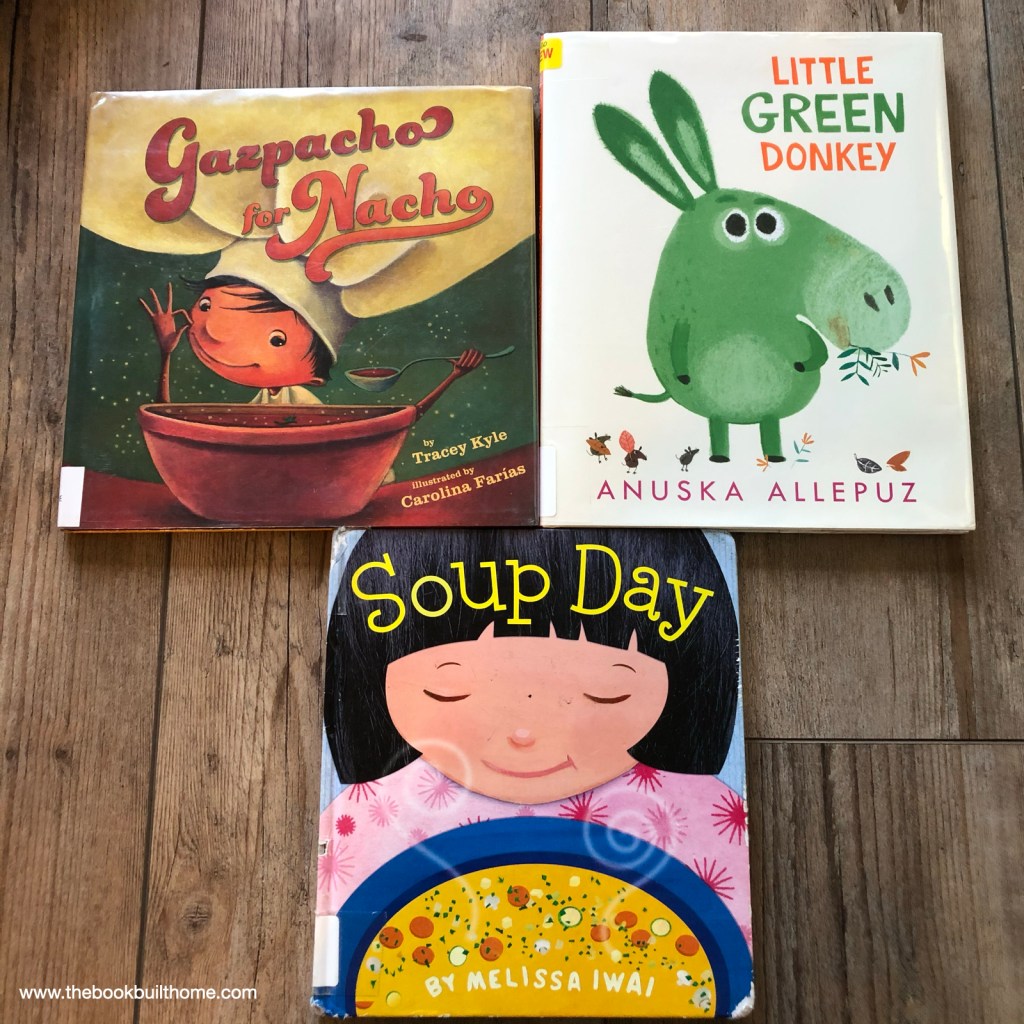
Soup Day by Melissa Iwai
Tops and Bottoms by Janet Stevens
Mrs. Peanuckle’s Vegetable Alphabet By Mrs. Peanuckle
Edible Numbers: Count. Learn. Eat by Jennifer Vogel Bass
Edible Colors: See. Learn. Eat. by Jennifer Vogel Bass
Monsters Don’t Eat Broccoli by Barbara Jean Hicks
Too Pickley! by Jean Reidy
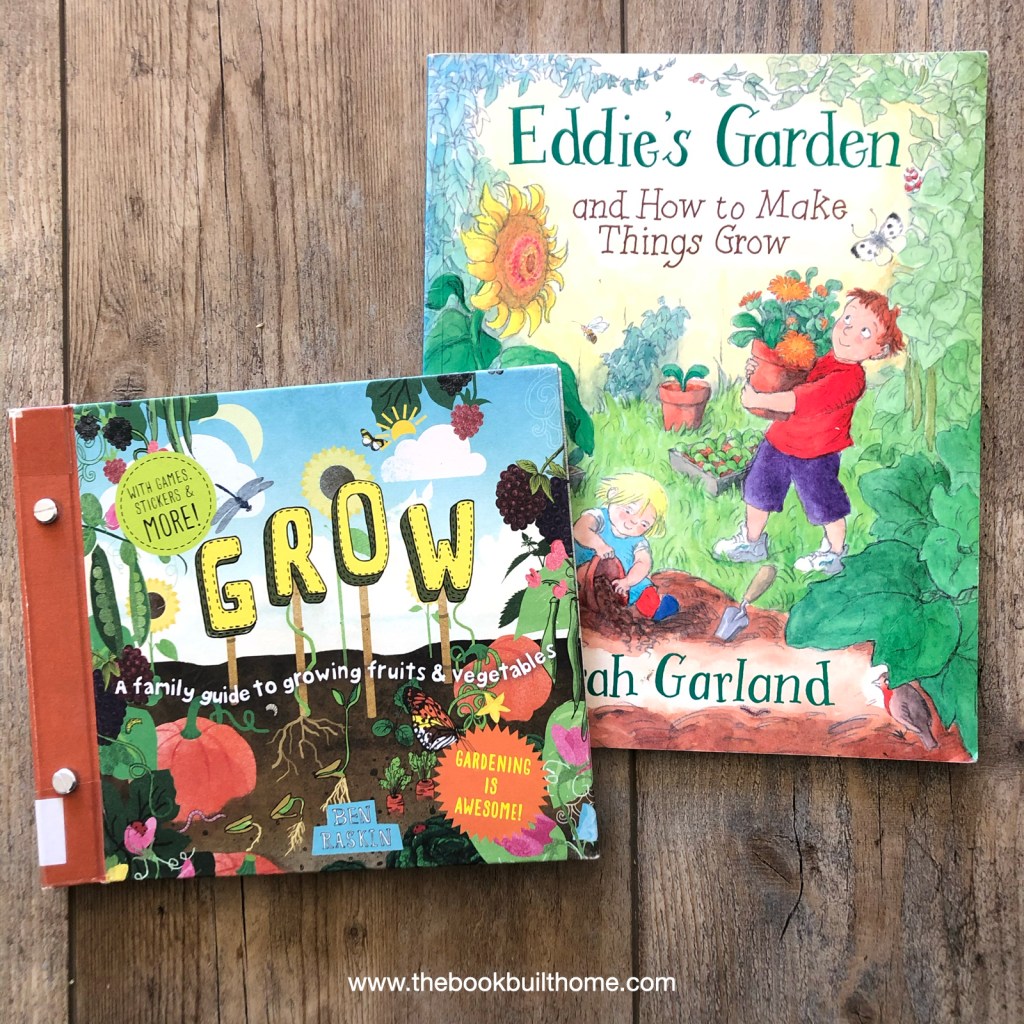
Grow a Family Guide to Growing Fruits and Vegetables by Ben Raskin
Eddie’s Garden and how to Make Things Grow by Sarah Garland
I Will Never Not Ever Eat a Tomato By Lauren Child
Gazpacho for Nacho by Tracey Kyle
Little Green Donkey by Anuska Allepuz
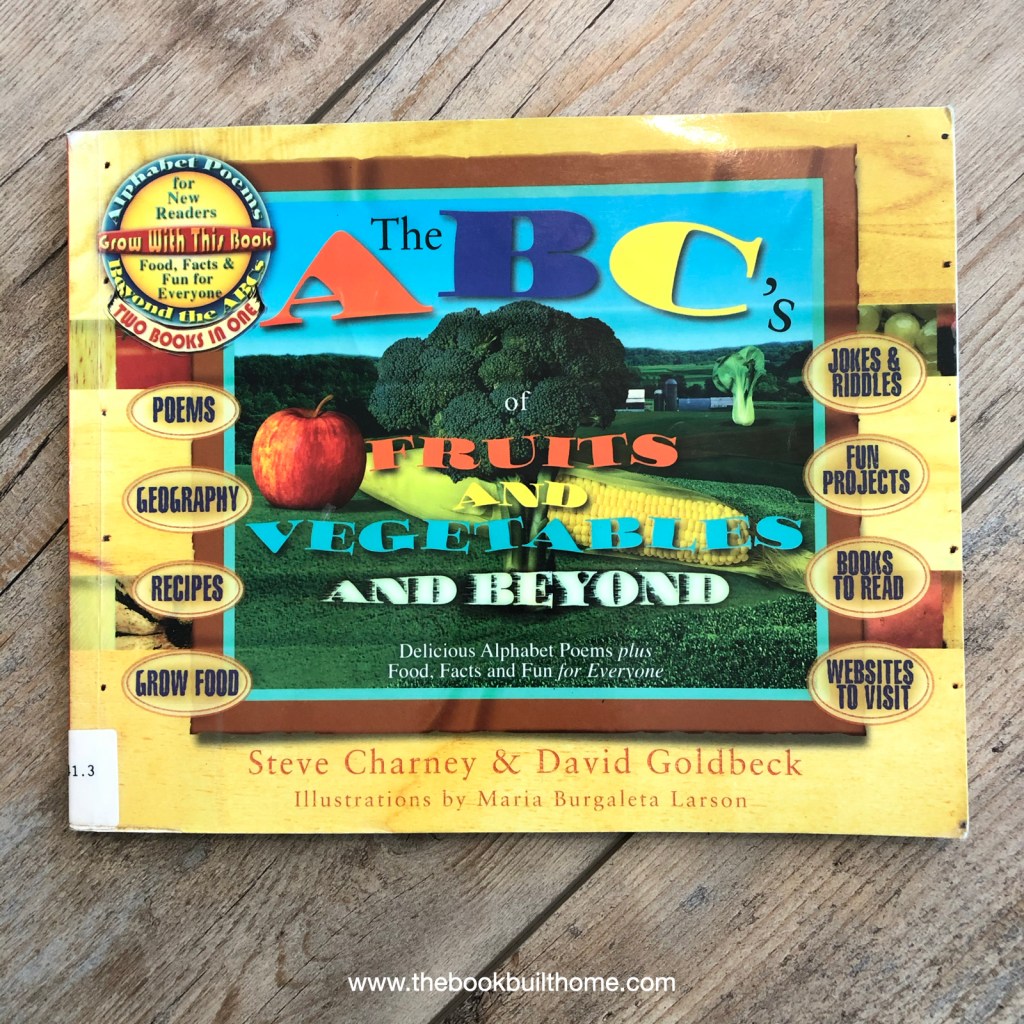
Fruits and Vegetables and Beyond by Steve Charney
V is for Vegetable Activity List
Literacy
Talk about the sound that the letter “V” makes.
Think of other words that start with the “V” sound: violin, vet, van, vase, vest, visit, vacation, volleyball, volcano, valley, violet, village
See if your child can find the “V” on the cover of each of the Vegetable Books you read.
We love the Leap Frog Letter Factory Movie for learning the letter sounds!
Download this FREE letter of the week coloring sheet. You can use this for dot-a-dot, coloring, or stickering. Alphabet Coloring Sheets (variety pack) PDF
Try these Upper and Lower Case Dot-a-Dot sheets
Check out my Alphabet Mega Pack

Math & Science
Where does it grow? Get out all the vegetables in your kitchen or wander around the produce section of the grocery store. Talk about where each one grows!
- Under the ground (potato, sweet potato, carrot, radish, beet, onions, garlic)
- On a stalk (corn, broccoli)
- On a vine (green beans, peas, snow peas, pumpkins, squash, cucumber)
- On a bush/tree (avocado)
- On a small plant (peppers, tomatoes, lettuce, kale).
Which part of the plant is it? Talk about which part of the plant a vegetable is. Learn more about this here and here.
- Leaf (lettuce, kale)
- Seed (peas, corn)
- Root (potatoes, carrots),
- Fruit (tomato, avocado),
- Stem (asparagus)
- Flower (broccoli, cauliflower).
Plant some vegeable seeds!
- Cool weather veggies (early spring, fall): potatoes, brassicas (broccoli, kale, cauliflower, brussels sprouts), lettuce, snow peas, sugar snap peas, garlic, onion
- Warm weather veggies (summer): tomatoes, peppers, green beans, pumpkins, squashes
Art, Music, Poetry, & More
Draw a cute Broccoli, Carrot, Corn from Art for Kids Hub.
Practice cutting vegetables together. Here are some kid safe knives!
Make vegetable soup
Have a snack of carrots, celery, and peanut butter
Make and use a carrot stamp or potato stamp
Watch Veggie Tales!
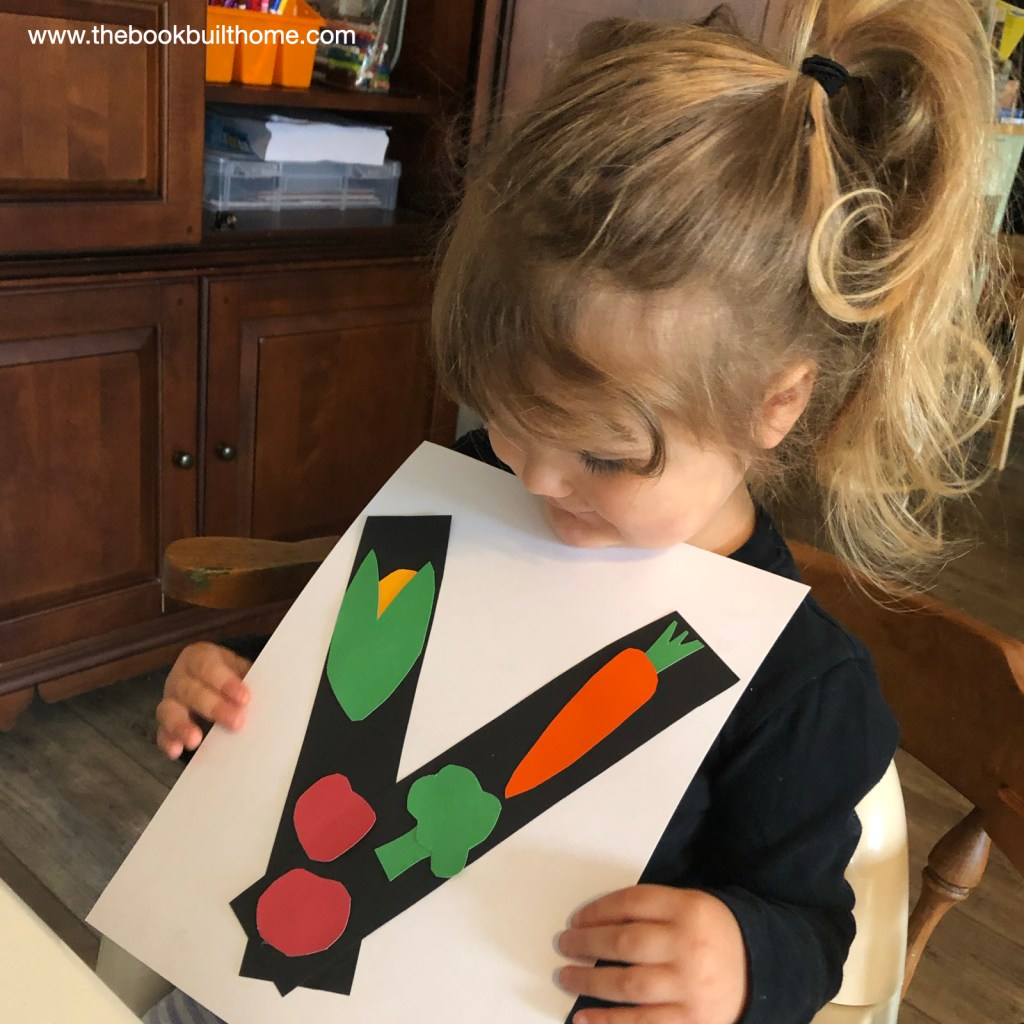
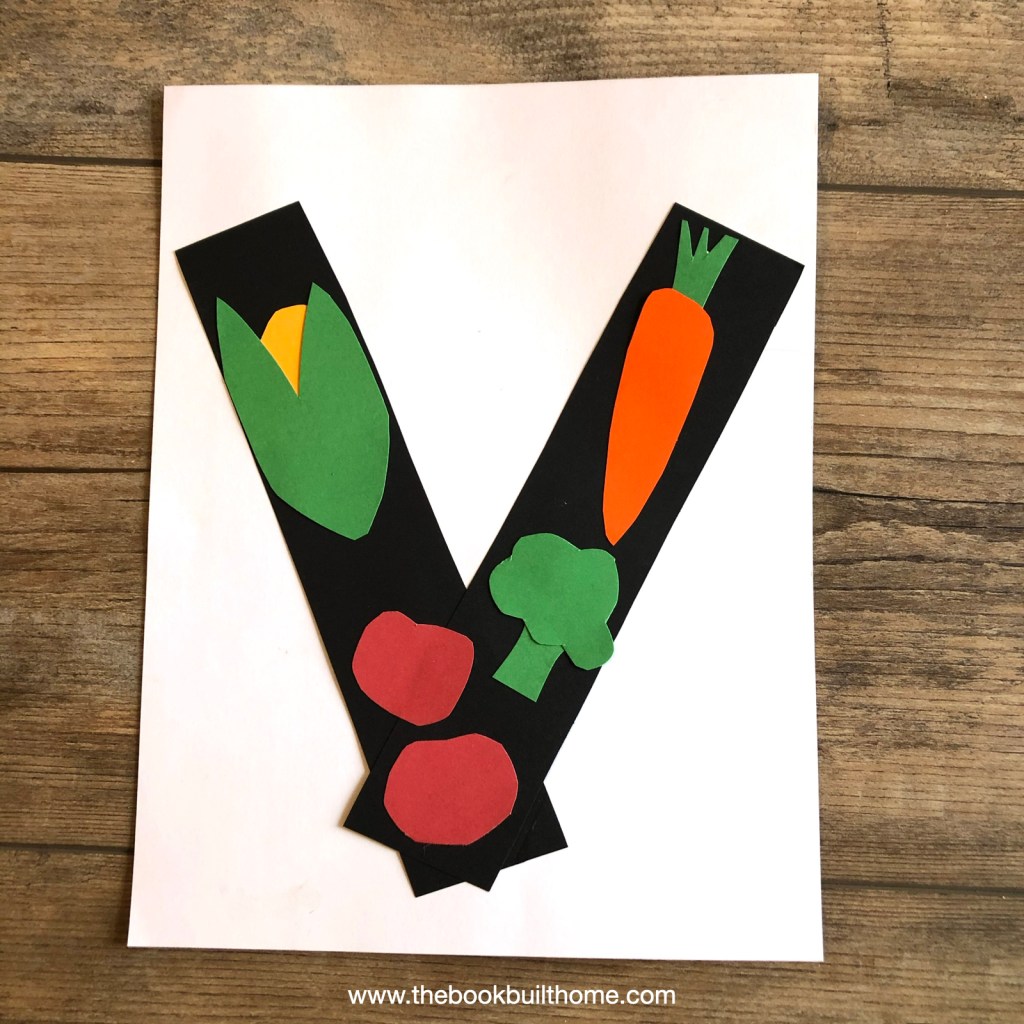
Make the Vegetable V below!
Biblical Integration
Here are some talking points: In the beginning God made the heavens and the earth. He made the land, the seas, the sun, moon, and stars. He made all kinds of plants. He made flying creatures and swimming creatures. He made animals to walk on land. He made Adam and Eve in His image. And he put Adam and Eve in a garden. He gave them the good work of tending that garden, that it might provide food for them. Fruits and vegetables were always a good part of God’s good plan!
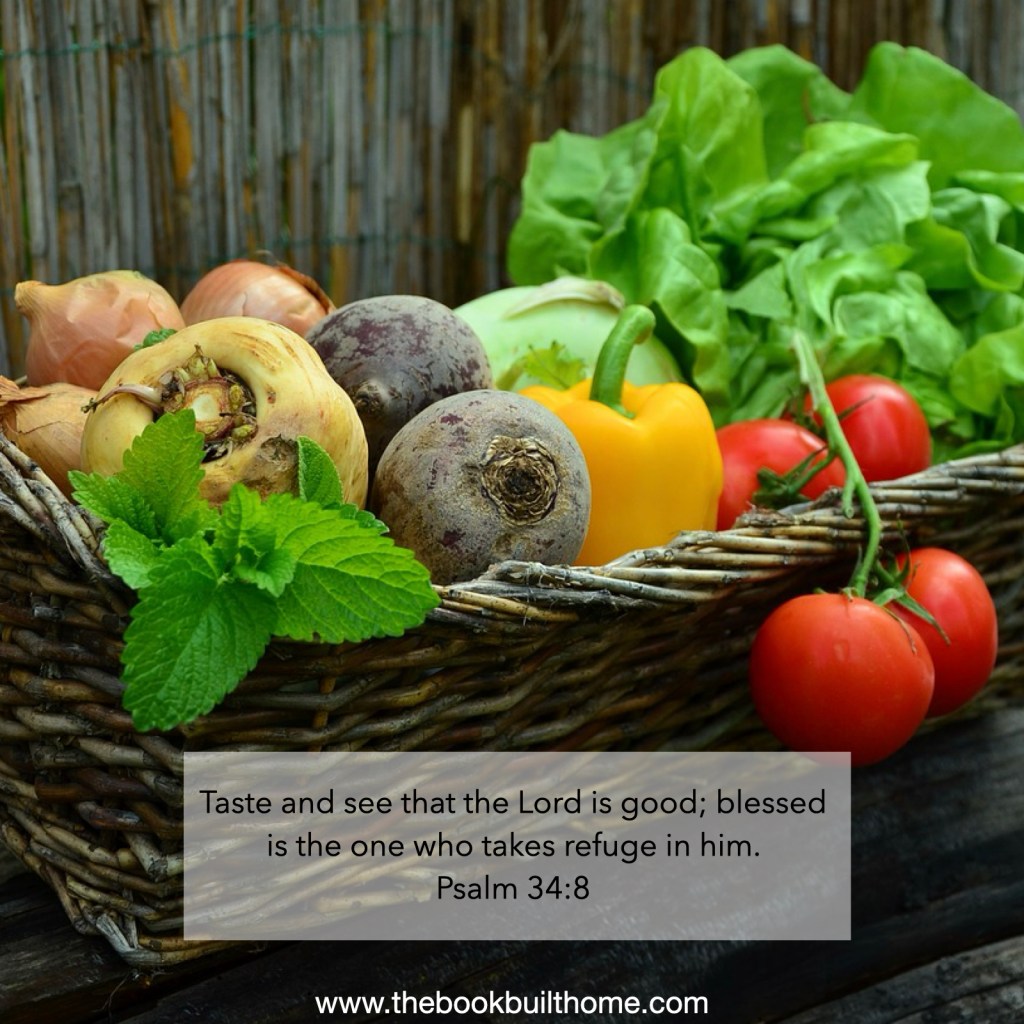
The beautiful colors and taste of fruits and vegetables invite us to taste and see God’s goodness. Every time we enjoy a carrot or an apple, we can taste God’s kindness, wisdom, and power! We can marvel how He makes good things grow out of the ground for our nourishment and joy.
Thank you for taking the time to read this. I pray it is a blessing for your family!
In Christ alone,
Trish
If this is helpful to you, please consider sharing with a friend and subscribing to receive new posts directly to your email!

 The Book Built Home